
The Loneliness of Motherhood: The Mental Load, Matrescence and Why So Many Mums Feel Alone
Whether you work or stay at home, the pressure of holding everything in your head can leave you feeling isolated. Matrescence helps explain why.
Stacey Hayes
Founder of Dino & Bear
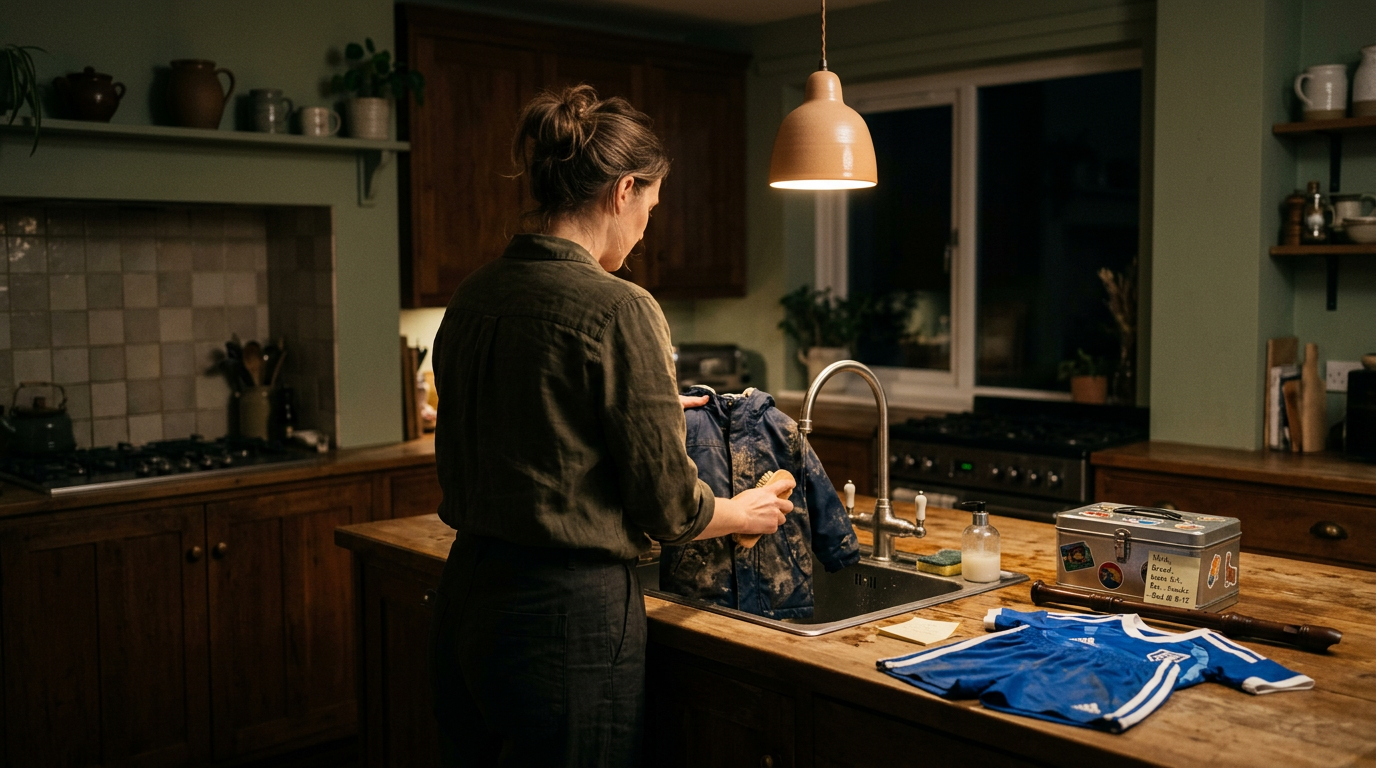
The kids are in bed. Homework is done, dinner has been eaten, baths are over and the bedtime routine has gone off without a hitch. By any measure it has been a good evening. And then I am standing in the kitchen at the end of the day, still working.
One needs a recorder for tomorrow, the other needs their football kit. Snacks are packed, the lunchbox is ready. I am frantically scrubbing mud out of a coat because there is no way it will be washed and dried in time. Just as I think I might finally sit down, I remember there is a dress up day on Friday and I have nothing for my youngest to wear. The box of hair dye I bought for myself has gone on the backburner again.
Nobody asked me to do any of it. Nobody will notice that it was done. And in a house full of people I have never felt more alone.
That is the loneliness of motherhood that we rarely talk about. It is not about being physically by yourself. It is about being the one who holds the whole picture in your head, whether you work or stay at home. This is a piece about that quiet pressure, and about matrescence, the word that finally helped me make sense of it.
Why is motherhood so lonely?
It is far more common than most of us admit. Research by the Co-op found that 82% of mums under 30 feel lonely some of the time, and more than four in ten feel lonely often or always. It is not only younger mums either. A poll of around 2,000 UK parents commissioned by Action for Children found that one in four had often felt cut off from friends and support since becoming a parent for the first time. Those surveys are a few years old now, but what mums tell me today sounds exactly the same.
I have been on both sides of the fence. I have been the mum juggling a business, a team and a diary that never stops, and I have spoken to many mums who stepped away from work to be at home. The loneliness shows up in both camps, it just wears a different outfit.
If you work, there is often a quiet guilt that follows you from room to room. In the office you are thinking about the school play you might miss, and at home you are thinking about the email you have not answered. You are never fully in one place, so you never fully feel at home in either. If you stay at home, the days can blur together, and the world of adult conversation, identity and achievement can feel like it has moved on without you. Nobody gives you a performance review for keeping small humans alive and happy, and that invisibility is heavy.
What is the mental load of motherhood?
The mental load is the invisible work of remembering, planning and anticipating for the whole family, and that kitchen at 9pm is exactly what it looks like. It is the constant running list in your head. The PE kit that needs washing, the form that needs signing by Friday, the present for a party you forgot was this weekend, the dentist, the shoes that no longer fit, the child who has gone quiet and needs a gentle check in. It is knowing who likes their toast cut which way and which teacher needs an email.
Because it happens inside your head, it is almost impossible to share, so you carry it alone. That is where the loneliness really lives. You are not only physically on your own at times, you are mentally on your own, holding a whole operating system that everyone relies on and almost nobody notices is running.
What is matrescence?
Matrescence is the process of becoming a mother. The term was first coined by medical anthropologist Dana Raphael in the 1970s, and psychologist Aurélie Athan of Columbia University later revived and expanded it. Athan describes it as a developmental passage that is individual to each woman, recurs with each child, and may arguably last a lifetime. She compares it to adolescence, a holistic change across multiple domains of your life.
We accept that adolescence is a huge shift, with hormones, identity changes, emotional turbulence and a lot of grace from the people around us. Matrescence is just as big, yet we are expected to glide through it smiling and grateful the whole time.
How does matrescence explain the loneliness?
When you see motherhood as a transition rather than a personal failing, everything changes. The overwhelm, the grief for your old self, the fierce love sitting right next to the resentment, the feeling that you have lost your footing even when everything looks fine from the outside. None of it means you are doing it wrong. It means you are in the middle of becoming someone new, and becoming is rarely comfortable.
It also explains why the loneliness does not disappear when the baby stage ends. Matrescence keeps unfolding as your children grow, as your work changes and as your relationships shift. The mother of a newborn and the mother of a ten year old are both still becoming, and both deserve to be held through it.
What actually helps?
I do not have a neat answer, but I do know a few things. Say the mental load out loud, even if it feels petty at first, because naming it makes it visible and visible things can be shared. Find the women who will answer honestly when you ask how they are really doing, because those friendships are worth more than any amount of polite small talk. And give yourself the same patience you would give anyone else going through a huge life change, because that is exactly what you are doing.
So the next time you find yourself in the kitchen after bedtime, scrubbing a coat and mentally rewriting tomorrow's list, I hope you remember that it is not a sign you are failing. It is a sign that you are carrying something enormous, and that very many other mums are standing in their own kitchens doing the same thing. You are not the only one holding it all together. You are in very good company, even if it does not always feel that way.
Frequently asked questions
Is it normal to feel lonely as a mum?
Yes. Surveys of UK mothers and parents consistently show that loneliness is common, whether you work or stay at home, and whether you have one child or several.
What is matrescence in simple terms?
It is the life changing transition into motherhood, covering the physical, emotional, social and identity shifts that come with it. It can last for years and happens again with each child.
Is the mental load the same as being tired?
No. Tiredness is physical, while the mental load is the constant effort of remembering, planning and anticipating for everyone else. It can leave you exhausted even on a day when you have physically done very little.
Found this helpful?
Share it with other parents who might benefit.
About Stacey Hayes
Founder of Dino & Bear
Stacey is the founder of Dino & Bear and a mum who knows the mental load of family life first-hand. She writes honestly about the invisible parts of motherhood - the worry, the juggle, and the small moments of connection that get us through.